Cornell Watson Photography
This content was written by Communities First; it was not written by and does not necessarily reflect the views of Mother Jones' editorial staff. See our advertising guidelines to learn more.
For decades, Americans have lived with the consequences of underinvestment and outdated systems in their communities. Families are navigating unaffordable housing, unreliable transportation, aging and inadequate water systems, and energy infrastructure stretched beyond capacity. Even as historic federal investments in climate resilience and infrastructure move through the pipeline, many Americans see no change on the ground. The reasons are familiar and structural. The country is operating on systems built for a world that no longer exists.
AmericaFWD is a new national movement powered by community voices and a coalition of the willing, committed to building the “new” way forward. Its premise is deceptively simple. Communities already know what works. They need partners who will listen, help them act, and challenge a governing system that treats clean water, safe mobility, and affordable homes as optional rather than essential.
At the center of this movement is Christopher Coes, a strategist shaped by the very gaps AmericaFWD seeks to close. His leadership helps anchor the movement’s grounding, a recognition that government is made up of people, many of whom are trying to do right inside systems that have not kept pace with modern needs. Coes is not the story. He is an example of a rising class of public sector leaders who remain steadfast in their commitment to ensuring the systems governing this country no longer fail the people they are meant to serve.
“Throughout my career, I’ve had the privilege to work with people who don’t just talk about progress. They deliver it,” Coes explained. “From rural towns to major cities, I’ve seen local leaders navigate tough constraints, stretch every dollar, and move projects forward for the people they serve. That spirit is at the heart of AmericaFWD.”
AmericaFWD is powered equally by community voices and public-sector leaders who are tired of watching good ideas die inside structures that cannot support them. It is a movement rooted in listening to the communities most impacted by government shortcomings, in partnership with leaders who follow through and get things done.
“Christopher has been a partner who honors his word. That matters when you’re asking communities to trust that real change is possible,” noted Stephanie Gidigbi-Jenkins, co-director of Communities First Fund, a supporter of AmericaFWD.
In 2025, AmericaFWD’s Senior Fellows led a national learning process that brought together local leaders, current and former state and federal practitioners, community organizations, private-sector innovators, and national partners to better understand this moment. This learning process engaged more than 60 working groups and roundtable participants across transportation, housing, water, and community wealth-building—and more than 100 civic, philanthropic, community, industry, and public-sector partners.
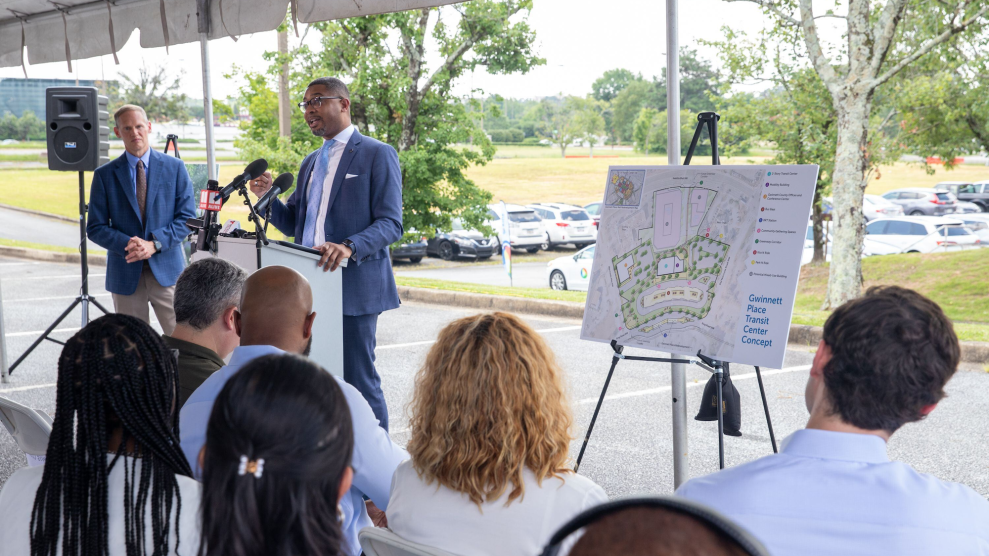
AmericaFWD also helped support the Reconnecting Communities Summit, bringing local advocates, organizers, and public officials to Washington, DC, to share lessons, elevate community-led priorities, and shape next-generation strategies for reconnection, resilience, and affordability.
Across all four pillars, the lesson is clear: people know what they want and are demanding a new civic infrastructure that centers communities, builds trust, and delivers projects and benefits.
This is AmericaFWD’s mission. It is a movement to build a new alliance of people across the country and a reimagined civic infrastructure and delivery system that creates safe, affordable, resilient, thriving communities within a generation for all Americans.
Building a Future That Moves People and Places Forward
America’s delivery systems were built for a different century. Today, rising costs, aging infrastructure, and slow or inequitable implementation prevent communities from experiencing the benefits of historic federal investments. Yet across the country, communities are ready for something better—and the window for generational change is open.
AmericaFWD starts where the country’s most enduring struggles lie: the failure of federal, state, and local systems to work together in ways that reflect how people live their everyday lives. Families do not experience transportation separate from housing, or clean water separate from health, or energy costs separate from economic mobility. Yet the government continues to operate in silos that force communities to chase fragmented solutions, making integrated solutions nearly impossible.
AmericaFWD challenges that logic. It envisions a nation where systems are aligned to meet people’s real needs, connecting transportation, housing, water, clean energy, and wealth building into coherent strategies grounded in place. The goal is not incremental. It is generational. A country where every person in every community can live, move, and build a future safely and affordably.
This vision does not come from Washington directives. It comes from people who are uplifting local solutions, not ideology, as the foundation for a new national agenda. It represents a shift from programs shaped in federal offices to strategies shaped by community experience.
Policy design is only half the work. Implementation determines whether any of it changes people’s lives. AmericaFWD is focused on ensuring both happen. People-centered policy and community-driven implementation. Its work is the practical, hands-on, day-to-day challenge of helping communities move from idea to action, from frustration to progress, from policy to plans that become real improvements residents can see and feel.
A Movement Built for Getting Things Implemented
Inside Washington, policy conversations often end at the bill signing. AmericaFWD does not stop there. It focuses on shaping the policy that can improve people’s lives and the implementation work that determines whether a project ever breaks ground or strengthens a community. This is the terrain where progress most often falters. It is also where communities feel the sharpest gap between promise and reality. AmericaFWD brings together the people, tools, and partnerships needed to ensure that community priorities not only inform national policy but deliver real-world results.
The movement recruits organizers, civic leaders, private sector innovators, local problem-solvers, and former public servants who form AmericaFWD’s Advisory Network of practitioners who “get stuff done” and know how government and the private sector work from the inside. They understand the constraints communities face: staffing shortages, outdated procurement rules, slow permitting, political churn, unclear authority, and the fragmentation that makes coordinated implementation so difficult.
This ecosystem is strengthened by leaders like Christopher Coes, whose approach reflects the movement’s ethos. He brings both small-town grounding and federal perspective, demonstrating what it means to carry lived experience into national decision-making and then back out again in service of community needs.
A Leader Who Never Forgot Where He Came From
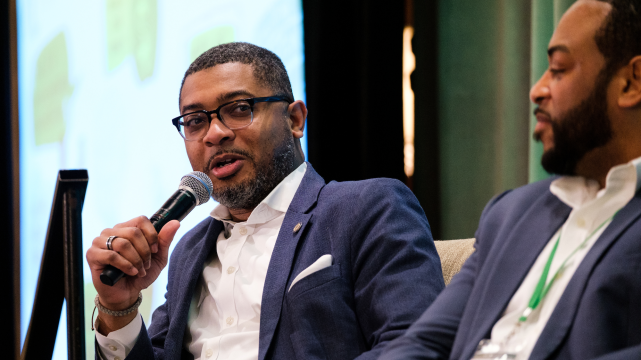
Coes’ story helps explain why AmericaFWD feels different from other national initiatives. He grew up in Thomasville, Georgia, a small Southern town where opportunity was shaped by the systems around you. As a young caregiver for his mother and great-grandmother, he learned early that infrastructure was not abstract. It was survival. It determined the safety of a bike ride across town, the length of a trip to get medicine, and the pathways and barriers built into daily life.
That grounding stayed with him through two decades of work across advocacy, research institutions, and federal service. He helped build coalitions committed to equitable development, examined how land use and market forces deepen inequality, and, in federal service, helped implement the American Rescue Plan, the Bipartisan Infrastructure Law, and the Inflation Reduction Act. He worked to embed equity, affordability, and climate goals into programs that reached communities across the country.
Inside government, Coes saw both the possibility and the limitation of the existing system. He witnessed how outdated procurement, staff shortages, and fragmented governance slowed progress. He also saw what communities could accomplish when supported and taken seriously.
His leadership at AmericaFWD reflects that dual understanding. Government is not a monolith. It is people trying to do hard things inside systems that need modernization. Those leaders need partners outside the system who can help communities move faster and more effectively than bureaucracy currently allows.
Helping Communities Deliver Real Results, Real Affordability
AmericaFWD is rewriting the next infrastructure and economic prosperity playbook. The movement is built on four interconnected strategies that serve one purpose: strengthen the country’s ability to implement climate and infrastructure solutions to match the urgency of the current affordability crisis and bridge the gap between community priorities and national outcomes.
Help Communities Deliver: Communities face real operational barriers—slow approvals, limited staff, interagency conflicts, and rules built for another era.
To address this, AmericaFWD recently launched the Project Delivery Accelerator Lab, a national effort introduced at the National League of Cities’ City Summit in Salt Lake City with support from the Kresge Foundation. The Lab helps communities move critical infrastructure projects from funding to implementation, cut through red tape, strengthen local capacity, and accelerate projects that make life safer, more affordable, and more connected. Roger Millar, a longtime leader in transportation, planning, and land use, has joined AmericaFWD as the Lab’s director.
Create New American Vision: AmericaFWD is building a bottom-up national infrastructure and economic vision and agenda centered on what communities say they need, not what institutions or elites say they can manage. The emphasis is on solutions that cut costs, improve mobility, reduce emissions, and strengthen resilience.
Build Power: The movement is strengthening networks across states and sectors to sustain long-term policy change. It understands that durability comes from people, not political cycles.
Execute and Advocate: AmericaFWD pushes for governance reforms that align federal, state, and local systems with actual community needs. This includes modernizing delivery rules, improving coordination, and embedding equity and climate resilience across decision-making.
This work is not theoretical. It is operational. It is designed to unblock projects, expand capacity, and ensure communities can seize opportunities that have historically bypassed them.
A New Delivery System for a New Era
What AmericaFWD is building is neither a campaign nor a traditional organization. It is part of the ecosystem, not just a thread but a weaver changing the patterns of inequitable investments and actions. A connective infrastructure between people who know what must change and the systems that must be transformed to make that change real.
The country is at an inflection point. The climate crisis is accelerating. Affordability is collapsing in many regions. Public trust in institutions is strained. Communities across the country are leading solutions, not waiting for them. They are organizing, innovating, and insisting that systems evolve to match the urgency of this moment.
AmericaFWD is helping foster the conditions for government, philanthropy, and civic leaders to align around a shared commitment to produce results at the scale people deserve. The work ahead is clear: Rebuild the civic infrastructure that connects national ambition with local reality, modernize the systems that determine whether public investment makes a difference, support the leaders who are already doing the work, and build a future where every community, from rural counties to coastal cities, can move forward.
This is what it looks like to build the future America promised. A future where people see progress in their lifetimes. And a future where systems finally match the urgency, creativity, and determination of the communities they serve.
To learn more, visit americafwd.org.
